Deep Tissue Massage Aftercare: Why the Next 48 Hours Matter
How Deep Tissue Massage Works and Why Aftercare Matters in Glasgow
Aftercare matters with deep tissue work. The firm, slow pressure can leave you sore, or even lightly bruised, for a day or two afterwards, not unlike the ache you’d get from a hard workout. What you do in those hours after is what decides whether the relief actually lasts.
You know the knot. The one sitting in your lower back, or wedged between your shoulder blades, that a light, flowing massage just seems to slide straight past. Deep tissue massage is built for exactly that kind of knot: firm, slow pressure that reaches down into the deeper layers of muscle, working loose the tight, stubborn bands of tissue that build up after an injury or months of carrying tension.
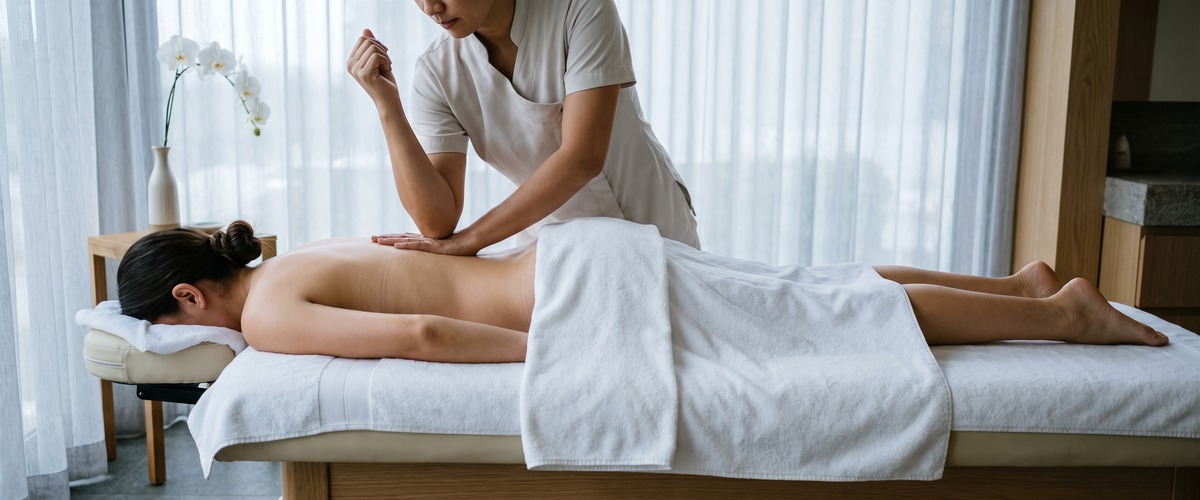
Rather than a light, gliding hand, your therapist works across the grain of the muscle, using thumbs, knuckles or forearms to reach where it counts.
That kind of pressure works beneath the surface, not over it, so it’s completely normal to come away feeling tender, or even a little bruised. Think of it the way a hard training session leaves you stiff the next day.
That’s not a flaw in the treatment. It’s simply the part of deep tissue massage most guides never get around to mentioning. And how you look after yourself over the next day or two is really what decides whether the relief lasts.
At Glasgow Thai Massage, deep tissue work sits at the heart of the Thai Mid-Deep Tissue Oil Massage. It draws on the same acupressure and sen line work as traditional Thai massage. The difference is the oil and the firm, targeted pressure.
You can book a deep tissue session online once you know what to expect. As Wikipedia’s overview of massage notes, massage broadly means rubbing or kneading the body’s soft tissue to ease stress or pain. Deep tissue work sits at the firmest end of that range, and our guide to deep tissue work covers the technique itself in more depth.
Deep Tissue Massage vs Therapeutic Massage Techniques
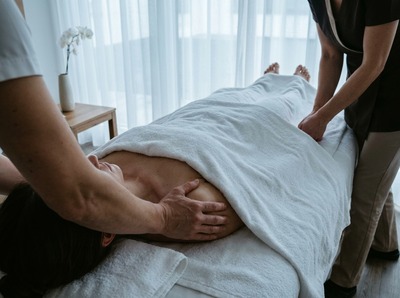
Deep tissue massage is different from gentler styles like Swedish massage. Swedish uses long, flowing strokes mainly for relaxation. Deep tissue instead targets a specific problem: lower back pain that has locked up, a stiff neck, or shoulders that won’t let go.
The two styles suit different jobs. A relaxation massage calms the whole body, while deep tissue work stays with one stubborn area until it starts to release.
Massage also works on the body’s chemistry, not just its muscles. A widely cited research review from the Touch Research Institute reported that massage therapy lowers cortisol, the body’s main stress hormone, by an average of around 31%. That change comes from real mechanical work on the tissue, not passive relaxation.
It’s exactly why you feel that pressure the next day.
Thai Mid-Deep Tissue Oil Massage in Glasgow City Centre
Glasgow Thai Massage is a traditional Thai massage studio in the heart of Glasgow city centre, offering authentic Thai massage, deep tissue and sports massage from experienced therapists. Clients who book in for deep tissue work usually arrive with a specific physical cause in mind, and they tend to say so in their own words.
One client wrote: “I had pain of my back ,shoulders and neck too much then I choose deep tissue massages for 1hour.” Another had tried a lot before walking in: “I’ve been to physio, other masseurs, dry needles, nothing really made a difference.”
That pattern is common. Tightness in the back, shoulders, neck or hip is why many Glasgow clients choose a 60-minute deep tissue session over a purely relaxing one.
The praise that follows is about pressure and results. “She knew exactly where to apply pressure and how to release tension without ever causing discomfort,” one review reads. Another simply says: “Could not believe the improvement after one massage.” That’s the sound of targeted deep tissue work, not general relaxation.
Why You May Feel Sore or Bruised After Deep Tissue Massage
Firm pressure on muscle can cause a little bleeding beneath the skin, from the tiny vessels sitting close to the surface. When that happens, it shows up as a bruise.
Soreness usually peaks 12 to 24 hours after a session, then settles within a few days. It follows much the same pattern as the delayed soreness you feel after a hard workout.
People often ask whether the pressure is meant to hurt quite this much. The honest answer: there’s a real difference between discomfort, which is a sign the work is reaching tight tissue, and pain, which means it’s gone too far. Say so, and your therapist will ease off straight away.
Maliwan has seen how much that control changes a session. One man arrived convinced Thai massage would be too intense for him, having heard stories about being folded into shapes. Once he realised he was the one in control of the pressure, he relaxed completely, and now he books in every month.
That’s why a trained therapist who reads your body matters more than raw pressure alone. As one client put it: “The massage was done to the pressure requested.” If you’d like to feel that for yourself, you can book your appointment here and mention the pressure you prefer.
Bruising isn’t proof that a session worked harder, or better. If a bruise turns out large, spreads quickly, or feels unusually painful, that’s not typical, so check in with your GP rather than assuming it’s just part of the process. If you take a blood thinner (an anticoagulant such as warfarin, apixaban or rivaroxaban), firm pressure can cause much heavier bruising, so get clearance from your GP before booking deep tissue work and tell your therapist before the session starts.
The Aftercare Protocol That Determines Your Deep Tissue Massage Results
This is usually where most deep tissue advice stops, and really, it’s where it should start. The session itself works loose that tight, stuck tissue and gets the blood moving through the area.
What you do next decides how it settles. Either that change sinks in, or your muscles simply tighten straight back up.
When someone feels deep tissue “didn’t work”, it’s usually the hours right after the session where things went wrong: straight back to sitting still for the rest of the afternoon, with the water forgotten altogether.
The first hour after you leave the table shapes the result more than most people realise. If you can, walk along West Nile Street towards Buchanan Street subway, rather than jumping straight into a taxi and back into a chair.
Look after yourself for the first day or two, and the soreness tends to settle much faster. Skip it, and you can end up carrying it for longer than you need to. It’s the part of the treatment that rarely gets explained.
Our take at Glasgow Thai Massage is simple. Real change often unfolds over the next 24 to 48 hours as your body integrates the work, so don’t judge the session only by how you feel walking out the door.
Treat those 48 hours like the recovery day after a hard gym session. Move within the hour, keep the water going and skip any heavy strain.
Tension has a way of creeping back if nothing changes between sessions, which is why maintenance matters so much. Maliwan has a regular client who once told her this is the one appointment she never cancels, even when work turns mad.
What to Do in the First 24 Hours After Deep Tissue Massage
- Hydrate well. Keep a glass of water to hand and sip through the rest of the day.
- Use a cool compress, 10 to 15 minutes at a time, if an area feels tender or shows light bruising.
- Move gently, and stay out of a chair for the first hour if you can. A short walk or light stretching keeps the treated muscle from stiffening back up.
- Skip hard exercise and alcohol for the rest of the day, both of which can worsen soreness.
- Rest properly, and avoid a heavy meal straight after your session while your body settles.
Skipping this window is the single biggest reason people feel deep tissue massage “didn’t work.” A regular rhythm helps too, paired with the full range of treatments at our studio in Glasgow City Centre.
Together, they turn one good session into lasting change. When you’re ready, you can book online in minutes or call 0737 932 2305. Mention any tight areas so your therapist can plan the pressure.
Found this useful? Add blog.glasgowthaimassage.co.uk as a preferred source on Google so our latest guides show up first for you in Search and AI Overviews.