Does deep tissue massage hurt? What to expect
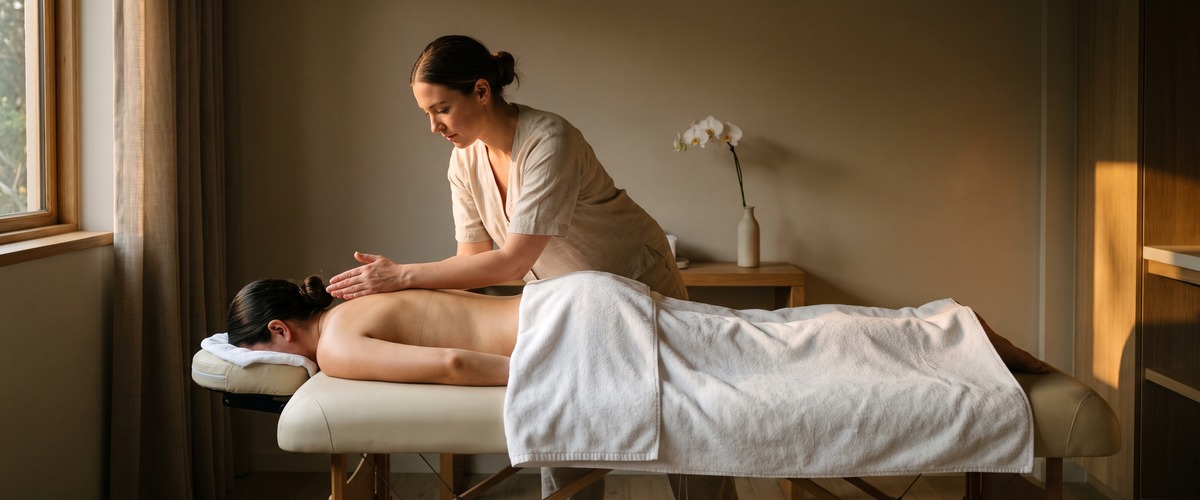
Deep tissue massage should feel like firm, focused pressure that eases as the muscle responds, not pain you white-knuckle your way through. That’s the single biggest misunderstanding we see at Glasgow Thai Massage: clients assume that if it doesn’t hurt, it isn’t working. The truth runs the other way.
Real pain during a session is your body telling the therapist to back off, not a sign they’re finally reaching the good stuff.
This matters because how you handle pressure in the moment shapes the whole treatment. A session built on gritted teeth tends to leave muscles more guarded, not less. A session built on clear feedback does the opposite.
Say something the second pressure tips from intense to painful, and you’ll usually walk out looser and feel better the next day.
If you’re weighing up whether to book a session for the first time, that difference is worth understanding before you lie down.
Does deep tissue massage hurt? What to expect from the pressure
Deep tissue massage uses slow, steady pressure into the deeper layers of muscle and connective tissue. That’s different from the light, gliding strokes of a relaxation massage. The pressure is meant to feel strong in places, especially over old problem areas like a stiff neck or a knotted lower back.
Strong is not the same as painful. Confusing the two is where most bad experiences begin.
What happens during a therapeutic massage aimed at deeper tissue
A session at this depth moves slowly. The therapist holds pressure over a tight spot instead of rushing across the muscle, giving the tissue time to soften rather than forcing it.
There’s research behind that approach. The Touch Research Institute at the University of Miami, led by Tiffany Field, found that moderate pressure massage produces better results than very light pressure, including lower anxiety and a calmer heart rate.
So deeper pressure earns its place. But “deeper” has a ceiling. Past that point, muscles tense up to protect themselves instead of letting go.
That’s the opposite of what you booked for. Deep tissue work sits in the same family as sports massage and Traditional Thai Massage. All three aim to reduce muscle tension.
They just get there by different routes.
So does deep tissue massage hurt, or is that just intense pressure?
It can feel intense without ever becoming painful. Knowing where that line sits comes down to talking. Pain science writer Paul Ingraham, whose work is widely used in massage training, puts it plainly.
Deeper isn’t automatically better. Plenty of benefit happens well below your pain threshold.
We hear this question in almost every first session. As Maliwan puts it when clients ask if it’s going to hurt: “There’s a difference between discomfort, which means the work is reaching tight tissue, and pain, which means we’ve gone too far. Just tell me if anything feels wrong, and I’ll ease off immediately.”
That isn’t a throwaway line. It’s the actual mechanism that makes deep work safe.
Reading your own signals during a deep tissue session
Jariya notices the same pattern with tense clients. They hold their breath the moment pressure increases, and they don’t realise they’re doing it. She points it out.
Once the breathing settles, that’s usually a sign the pressure has landed in the right range. Breath is a more honest signal than a grimace. Most people will smile through pain out of politeness before they’ll say a word.
Ask around on any massage forum and you’ll find people describing sessions that hurt from start to finish, then wondering whether that’s simply how it’s meant to be. It isn’t. Hitting an intense spot now and again is normal. An hour that hurts throughout means the pressure needs changing, or the technique does.
It doesn’t mean you need to toughen up.
What clients actually report after the pressure is right
Here’s the part the “no pain, no gain” crowd tends to miss. In our experience, the biggest changes come from sessions that were never painful at all.

Maliwan worked with a client who had spent fifteen years at a desk. Her shoulders were so locked that she could turn her head only a few degrees. Nothing about that first session was brutal.
It was slow, firm, and she was asked about the pressure throughout. By the end she could move her neck freely, and she got a bit tearful, because she’d forgotten what that felt like.
We saw something similar with a financial analyst in her early forties. She’d had lower back pain for five years, despite regular stretching and a standing desk. She had six weekly Traditional Thai Massage sessions with us at moderate, communicated pressure.
Her pain dropped away over that stretch. Six steady sessions beat one punishing hour every time.
That pattern shows up in our reviews too. Clients describe therapists who know exactly where to apply pressure and how to release tension without ever causing discomfort. They leave feeling lighter and refreshed, not battered.
The odd review mentions pressure that tipped into too much. That’s exactly the moment a quick word would have changed the next ten minutes.
If you work in the offices around Blythswood Square or St Vincent Street, this matters even more. Years of laptop-hunched shoulders won’t clear in one session. Glasgow Thai Massage sits in Victoria Chambers on West Nile Street, a short walk from Buchanan Street subway, so keeping up steady visits is realistic even on a working week.
Steady beats savage.
What to expect in the day or two after your session
Mild soreness for 24 to 48 hours is normal. It feels much like the ache after an unfamiliar workout. It’s one of the downsides worth knowing about before you book.
Light bruising can happen where the work was firm, though it shouldn’t be widespread. If soreness is severe, spreading, or still there after a week, tell your therapist or your GP.
This is where the pain-equals-progress myth causes the most trouble. A rough session that leaves you sore for four days is not better than one that leaves you tender for one. It usually means the pressure ran ahead of what your body could process.
Drink some water, keep moving gently, and give yourself a quiet evening if you can. The work continues after you leave the room.
Curious about Thai sports massage for training recovery? Our in-depth look at deep tissue massage goes further into what happens in the body over time.
Deep tissue massage should never be something you brace for. Firm, yes. Intense in places, often. Genuinely painful is a signal to speak up, not a badge of a good session.
Say something the moment pressure crosses that line, and you’ll get more out of the hour, not less. If you’re ready to try it with a therapist who works that way, you can book online and tell us exactly what you want to work through.
Sources:
- Massage Pressure: How Deep is Too Deep? (Paul Ingraham, PainScience.com)
- Moderate vs. Light Pressure Massage (Massage Therapy Journal)
- Does Deep Tissue Massage Hurt? (Healthline)
Found this useful? Add blog.glasgowthaimassage.co.uk as a preferred source on Google so our latest guides show up first for you in Search and AI Overviews.