Massage Therapy for Sciatica Relief
Sciatica is one of the most common reasons people come to us at Glasgow Thai Massage with lower-body pain. That deep ache or sharp, shooting sensation running from the lower back into the buttock and down the leg is unmistakable once you’ve felt it — and it can make sitting, walking, and sleeping genuinely miserable. Massage therapy won’t replace a proper medical diagnosis, but for many people it can ease the muscular tension that feeds the pain. This guide explains what sciatica actually is, how massage — particularly traditional Thai techniques — may help, and when you should see a GP or physiotherapist instead.
What sciatica actually is
Sciatica is not a condition in itself; it’s a set of symptoms caused by irritation or compression of the sciatic nerve. That nerve is the longest and widest in the body, running from the lower spine through the buttock and down the back of each leg. When it’s pinched or inflamed, pain radiates along its path — often with numbness, tingling, or weakness in the leg or foot.
The most common causes are a herniated (slipped) disc, spinal stenosis, or a tight piriformis muscle in the buttock pressing on the nerve. According to the NHS, sciatica often improves within four to six weeks without specialist treatment, though it can sometimes last longer. Knowing the likely cause matters, because massage helps most when the pain is driven by muscular tension rather than a structural problem in the spine that needs medical management.
How massage may help ease sciatic pain
Massage doesn’t directly “fix” a compressed nerve, but it can address several of the factors that make sciatica worse:
- Releasing tight muscles around the nerve. Tension in the lower back, glutes, and especially the piriformis can compress or aggravate the sciatic nerve. Loosening these muscles may relieve some of that pressure.
- Improving local circulation. Increased blood flow delivers oxygen and nutrients to tissues, which supports the body’s own recovery and can help reduce stiffness.
- Calming the nervous system. Massage can lower stress and muscle guarding — the involuntary tightening that often surrounds a painful area and makes movement harder.
A 2014 systematic review published in Pain Physician found that massage therapy can be a useful option for non-specific low back pain, which frequently sits alongside sciatic symptoms. As with any therapy, results vary from person to person.
Why Thai massage in particular
Traditional Thai massage is well suited to sciatica because it combines several techniques in one session rather than relying on kneading alone. Our practitioner Maliwan trained in the Wat Pho tradition in Bangkok and has over 20 years of experience, and a typical treatment for lower-back and leg tension draws on:
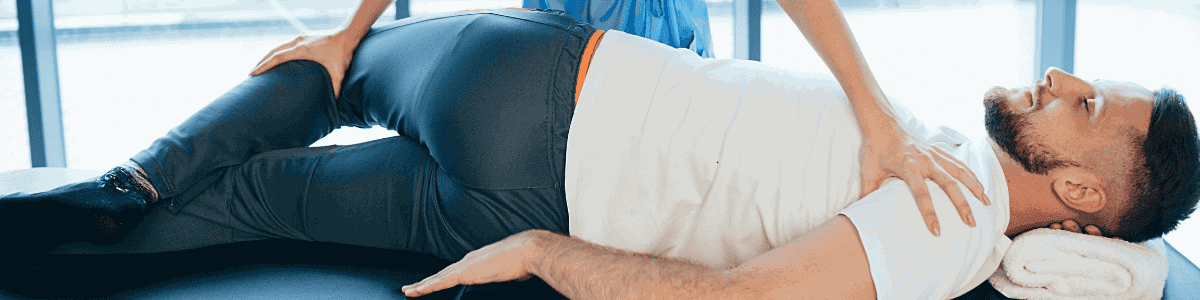
- Assisted stretching — slow, supported stretches through the hips, hamstrings, and lower back that can improve range of motion and gently lengthen tight muscles around the nerve path. This is closely related to the work covered in our guide to Thai massage for sciatica: how stretching and acupressure can ease the pain.
- Acupressure — sustained thumb and palm pressure along the body’s energy lines (sen), which can release specific points of held tension, including in the glutes and piriformis.
- Rhythmic compression — firm, rocking pressure that warms the tissue and helps muscles let go without the sharp poke of deep-tissue work.
Because Thai massage works the whole posterior chain rather than one isolated spot, it can be a good fit when tightness in the hips and hamstrings is contributing to the problem. For more on how this connects to general lower-back tension, see our comprehensive guide to understanding sciatica and lower back pain.
What to expect during a session
If you’ve not had Thai massage before, a few things are worth knowing. You stay fully clothed in loose, comfortable garments, and the work is done on a padded mat on the floor rather than a table. A session usually begins with a short chat about where your pain sits and what triggers it, so the treatment can be adapted — pressure and stretches are always worked to your comfort, and you should speak up if anything feels too much. Some people feel looser immediately; others notice the benefit over the following day or two. It’s normal to feel mildly tender afterwards, much like after exercise.
When to see a GP or physiotherapist instead
Massage is a supportive therapy, not a substitute for medical care. You should see a GP or physiotherapist — and hold off on massage until you have — if your sciatica is severe, persistent beyond a few weeks, or getting steadily worse. Seek urgent medical attention if you develop numbness around the genitals or buttocks, loss of bladder or bowel control, or significant weakness in a leg, as these can signal a serious problem. A clinician can confirm the cause and rule out anything that needs prompt treatment, after which massage can often complement your recovery plan.
A couple of common questions
Can one massage cure sciatica? No single session is a cure. Massage may ease the muscular tension contributing to your symptoms, and many people find a course of treatments more helpful than a one-off. The underlying cause still needs addressing, often with stretching and movement between sessions.
Is deep pressure always best for sciatica? Not necessarily. Overly aggressive work on an inflamed area can aggravate it. Thai massage’s blend of supported stretching and graduated compression is often gentler on an irritated nerve than heavy deep-tissue work, and tension itself is a major driver of pain — our piece on why muscle knots form and how massage helps explains the mechanism.
Practical takeaways
Sciatica usually improves with time, gentle movement, and managing the muscular tension around the nerve. Massage — particularly Thai techniques combining stretching, acupressure, and compression — may ease that tension and support your recovery, but it works best alongside, not instead of, proper medical assessment for severe or lasting pain. If muscular tightness in your back, hips, and hamstrings is part of the picture, a treatment with an experienced practitioner can be a sensible place to start.
Ready to address the tension behind your sciatica? You can book a session with Maliwan at Glasgow Thai Massage.