Is Thai Massage Painful? What the Discomfort Actually Means
Is Thai Massage Painful? Why the Ache Might Be the Point
Ask anyone who has never tried Thai massage what they expect, and you will hear some version of the same worry: it is going to hurt. People picture being pulled into strange shapes, therapists leaning their full body weight into a shoulder, bruises the next morning. Somewhere along the way, “intense” got filed under “bad.”
Before we go further, a word for anyone reading this with their shoulders already up around their ears. If it’s the stretching and the firm point-work that worries you, you don’t have to book it. There’s a gentler way in.
Our Thai oil massage trades the assisted stretches and sen-line pressure for flowing, oil-based strokes. You stay warm, you stay still, and the work stays where you can feel it easing rather than testing you. It’s the soft option in every sense — deeply relaxing, no folding into shapes, no bracing for the next stretch. Plenty of clients start here, then try traditional Thai massage once they trust the room.
That filing is the mistake. In traditional Thai massage, the most intense moments are often the useful ones.
Think of deep acupressure along a tight muscle, or a slow stretch through a stiff hip. That is often exactly where the therapeutic work is happening.
The discomfort is not always a flaw to remove. Sometimes it is a sign that something useful is going on under your skin.
At Glasgow Thai Massage, people ask about pain more than almost anything else before a first booking. The honest answer is that it depends. It comes down to your body, your therapist’s technique, and how well you talk during the session.
Want to talk through pressure levels before you commit? You can book a session online and raise it when you arrive.
Why That Ache Might Mean the Massage Is Working
Thai massage works differently to a standard relaxation rub. It combines two things.
First, acupressure: firm point pressure along the body’s sen energy lines. Second, assisted stretching that moves your joints further than you could reach alone.
This combination aims to release muscle tension. That tension is the tightness that builds up in overworked or unused muscle fibres. It does more than smooth over the surface.
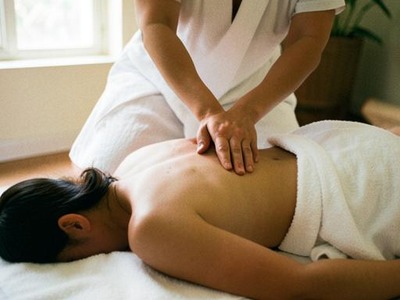
One study measuring pressure pain threshold looked at people with chronic headaches. Traditional Thai massage raised how much pressure they could take before it felt like pain. Their headaches eased too.
In plain terms, the treatment trained their bodies to handle more. It did not just numb them for a while.
This is the piece most people miss when they ask if Thai massage is painful. A session with no sensation at all is not always better than one that makes you wince and then release.
Real change from bodywork often keeps unfolding for a day or two after you leave. So judging a session only on how it felt in the room misses half the picture.
Traditional Thai Massage vs Deep Tissue Massage: Different Pressure and Purpose
If intensity worries you, it helps to know that not every treatment uses pressure the same way. Deep tissue massage works through oil and direct pressure into set muscle layers. It tends to feel like a steady push into one spot until it releases.
Traditional Thai massage builds pressure differently. It moves along energy lines and adds stretching. So the feeling spreads and shifts rather than staying in one place.
We offer both traditional Thai massage and deep tissue massage. We also offer Thai sports massage for clients managing training injuries or recurring niggles.
Does deep, still pressure make you tense up? The rhythm of pressure and release in Thai massage may suit you better.
It works through pressure and release, not pressure and hold. The overall intensity can be similar, but it often feels easier to manage.
How Painful Is a Thai Massage Really
Reddit threads on Thai massage are full of this exact question. The honest answers vary.
One reviewer said a traditional session “at times felt more like assisted stretching than a massage.” The intensity caught them off guard compared to a Western-style rub. Others admit they arrived nervous because of stories they had heard years earlier.
Maliwan has practised Thai massage for over twenty years. She trained at Wat Pho in Bangkok, and she sees that nervousness all the time.

She remembers one client who was sure the treatment would be too intense. He had heard stories about being folded into shapes. Then he realised he stays fully clothed and controls how much pressure is used.
He relaxed completely. Now he books every month, because it is the only hour he actually switches his phone off.
First sessions tend to feel the most intense. Your body is simply not used to this kind of work.
Most regular clients say the same pressure feels easier after a few visits. Tight areas soften with repeated treatment. You also learn what to expect.
When to Speak Up During a Session
There is a real difference between a therapeutic ache and pain that means something is wrong. Knowing which one you feel matters.
A deep, releasing feeling that eases as the therapist moves on is normal. Sharp, stabbing, or numbing pain is not. Report it straight away.
Some Thai massage complaints online describe bruising or swollen, lumpy areas after treatment, often around the neck. That should not be a normal part of a good session. It is a fair concern to raise before you book anywhere.
A well-trained therapist checks in throughout. They adjust pressure to what you can handle and explain what they are doing as they go. Clients often mention this exact detail when they say a session put them at ease.
That two-way chat is what makes the intensity work in your favour, not against you. Gritting your teeth through it does not.
If something feels wrong, saying so is not making a fuss. It is how the therapist knows to change what they are doing.
Our therapists work from Victoria Chambers on West Nile Street, a short walk from Buchanan Street subway. Every session starts with a chat about what you are dealing with and how much pressure you actually want.
Ready to feel the difference between discomfort that helps and pain that does not? You can book your appointment and tell us exactly where it hurts.
Next time a session feels more intense than you expected, pause before you decide something has gone wrong. Thai massage was never meant to feel like nothing.
Asking whether it is painful misses the better question: is that discomfort doing something for you? Learn to read that difference.
Speak up the moment it crosses into something wrong. That is what turns an intense session into a truly useful one.