
Massage for Headaches and Migraines: Why Timing Changes Everything
Why Massage for Headaches and Migraines Depends on When You Book
The advice you will find in almost every article on this topic is: get a massage to relieve a migraine. That advice is not wrong. But it is incomplete in a way that matters considerably. Trigger point work applied during an active migraine attack can make symptoms worse, because the nervous system is already in a state of heightened sensitivity where pressure amplifies pain rather than reducing it. The same techniques, scheduled regularly between attacks, reduce migraine frequency meaningfully for many people. That one distinction changes the entire approach, and it is almost never addressed in standard massage-for-migraine content.
The Problem with Treating a Migraine Mid-Attack
During a full migraine, something called central sensitisation takes hold. It causes your pain pathways to fire far more than normal. Pressure that would normally feel like relief can add extra pain to an already overloaded system.
This is why some clients arrive at Glasgow Thai Massage in what turns out to be the prodrome phase. That is the warning period before pain fully peaks. Even moderate pressure can intensify their symptoms at this stage.
A complaint that appears regularly in migraine communities captures this precisely. One person described what happened when their therapist worked a knot in their upper back. The whole area “tightened and spasmed incredibly painfully to the point of making my ears pop.”
That is not a rough therapist. That is trigger point work applied to a nervous system already primed for pain.
The technique was not the problem. The timing was.
Therapeutic Massage for Tension Headaches Works Differently
Tension-type headaches and cervicogenic headaches behave differently from migraines. Cervicogenic headaches originate in the neck and upper cervical spine. Both respond well to soft-tissue work even while the headache is present.
The mechanism is muscular compression rather than a neurological storm, which changes how the body receives pressure. Clinical research on cervicogenic headache management confirms that releasing the suboccipital muscles significantly reduces pain intensity and neck disability.
These are the deep muscles at the base of the skull. They often lock up from screen use and desk posture.
This distinction matters when you are booking. “I get migraines” and “I get tension headaches” should lead to different session structures.
If your headaches are driven by neck restriction and posture rather than a full neurological migraine pattern, book a focused neck and upper body session. Describe the location and pattern of your pain when you get in touch.
When to Book Massage for Migraine Relief: The Interictal Window
The period between attacks is where massage does its most effective work for migraine management. Research into trigger point therapy has found significant reductions in migraine frequency. Sessions scheduled during symptom-free periods work better than those booked in response to acute pain.
The mechanism is simple. Regular treatment releases muscular tension and active trigger points. This raises your migraine threshold and makes the next attack harder to trigger.
For people in Glasgow, this timing strategy has particular relevance. The city’s damp, low-pressure autumn and winter weather is a well-documented migraine trigger.
Building a regular session cadence before October can help hold your threshold higher through the worst months. Generic migraine-and-massage content rarely reaches this level of planning, because it is written around a single bad day rather than a season.
What Our Therapists Look For
Maliwan has seen this pattern many times. A client presents with shoulder tension. But the real issue is restriction in the suboccipital muscles, with a referral pattern running up and across the skull.
“I had a client come in with such tight shoulders that she couldn’t turn her head more than a few degrees,” Maliwan recalls. “After the first session, she could move her neck freely again, and she actually cried a little because she’d forgotten what that felt like.”
That kind of restriction develops quietly over years of desk work. It is a classic early sign of both tension headaches and cervicogenic migraines.
Jariya has noticed something equally useful in chronic headache clients. They arrive wound tightly and hold their breath through the opening work without realising it.
“Once I point out that they’re breathing normally again halfway through the session,” Jariya says, “they realise how much tension they were carrying just in their breathing.” Easing the breath is not a side note in a good massage session. For chronic headache sufferers, it is part of the treatment itself.
Getting the Pressure Right
For massage to help rather than worsen a headache condition, pressure has to be calibrated carefully. It depends on where you are in your cycle.
Too light and the trigger point remains unaddressed. Too deep at the wrong phase and you risk exactly the sensitisation response described above.
This is why communication before and during the session matters so much. A therapist who genuinely adjusts to your feedback is essential.
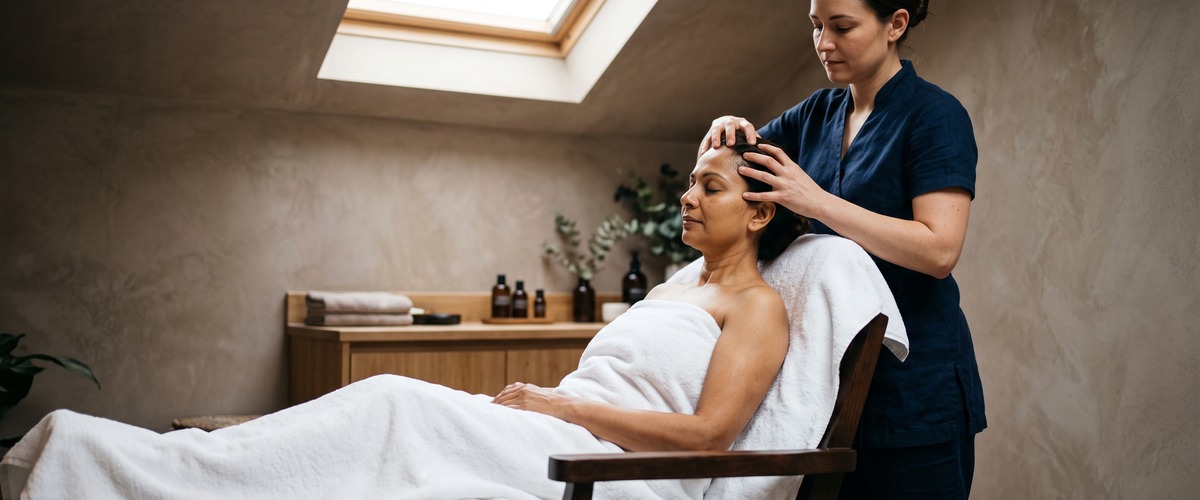
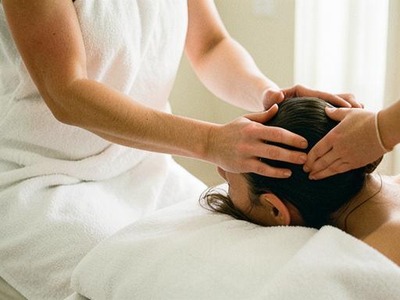
Thai head massage at Glasgow Thai Massage works directly on the scalp, neck, and upper shoulders. It is often the right starting point for clients whose headaches concentrate at the top of the skull or behind the eyes.
For headaches driven by postural patterns across the upper back and shoulders, a full traditional Thai massage session addresses the whole chain rather than the site of the pain alone. Clients who carry their headache tension alongside sports load or long working hours often do best with Thai sports massage. It targets the neck and shoulder muscles directly and often reaches the root cause.
Make the Timing Work for You
The most effective approach to managing headaches and migraines with massage is not to book when the pain is already peaking. Instead, build a regular session rhythm between attacks.
Give your therapist an accurate account of your headache pattern. Treat each session as part of an ongoing strategy, not a one-off rescue.
Glasgow Thai Massage is in Victoria Chambers on West Nile Street. It is a short walk from Buchanan Street subway and the main city centre offices.
If you are ready to build a preventive approach into your routine, book your appointment online and note your headache type and pattern when you get in touch. The more specific the picture you bring, the more precisely the session can be structured to help.