Thai Massage for Stress and Anxiety: What Your Nervous System Needs Before the Session
How Thai Massage Works on Stress and Anxiety
Stress and anxiety are not only feelings. They show up in the body as a state the nervous system holds: shallow breathing, a clenched jaw, tight shoulders, a quickened pulse. Thai massage may help ease that state because it works on the same system that produces it, not only on the muscles you can feel.
Maliwan trained in the Wat Pho tradition in Bangkok and has more than twenty years of practice, and the work below is grounded in that lineage rather than a generic “relaxation” approach.
The Stress Response and the Two Sides of Your Nervous System
The autonomic nervous system runs two branches. The sympathetic branch drives fight-or-flight: it raises heart rate, tightens muscles, and keeps you alert. The parasympathetic branch handles rest and recovery, slowing the heart and letting muscles release. That second side carries what Harvard cardiologist Dr Herbert Benson named the “relaxation response” in his 1975 book of the same name.
Chronic stress keeps the sympathetic branch dominant, so the body stays braced with no real threat present. A massage that helps with anxiety is, at root, one that nudges the balance back toward the parasympathetic side so the body can stand down.
Thai massage supports that shift in a few specific ways:
- Sustained, rhythmic pressure along the body’s sen energy lines gives the nervous system a slow, predictable input it can settle into.
- Assisted stretching asks you to let a limb be moved rather than holding it yourself. That act of letting go is itself a parasympathetic signal.
- Slowed, deeper breathing tends to follow once the work begins, and breathing is one of the few direct levers we have on the stress response.
What the Research Suggests
There is measurable evidence that traditional Thai massage can move stress markers in the right direction. A controlled study published in 2015 on the effect of traditional Thai massage on stress biomarkers found reductions in salivary alpha-amylase — a marker of sympathetic nervous system activity — alongside reported drops in tension and anxiety. Earlier work has pointed the same way for cortisol and self-reported stress.
The honest framing matters: this is promising evidence that Thai massage may ease the physical side of stress, not proof of a cure. It works best as one supportive part of looking after yourself, not a replacement for medical care. If your anxiety is severe, persistent, or interfering with daily life, it warrants assessment by your GP or a mental health professional.
Where Anxiety Sits in the Body — and How the Work Reaches It
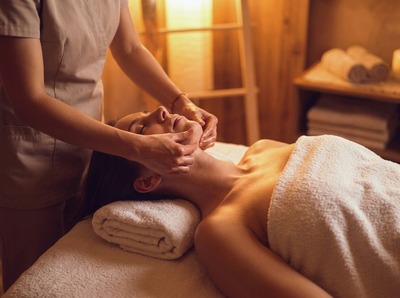
Anxious bodies tend to brace in predictable places: the shoulders and upper back, the base of the skull, the jaw, the hip flexors, and the calves. These are the points Thai acupressure works through. Easing them does more than relieve tightness; it interrupts a feedback loop in which a tense body sends “danger” signals upward, the brain keeps the body tense in response, and the cycle sustains itself.
If you carry a lot of physical tension, why muscle knots form and the science behind tension explains the mechanism in more depth, and the Thai yoga massage stretching techniques guide covers the assisted-stretch side that does much of the parasympathetic work.
Choosing the Right Style for Stress
Not every approach suits every kind of stress.
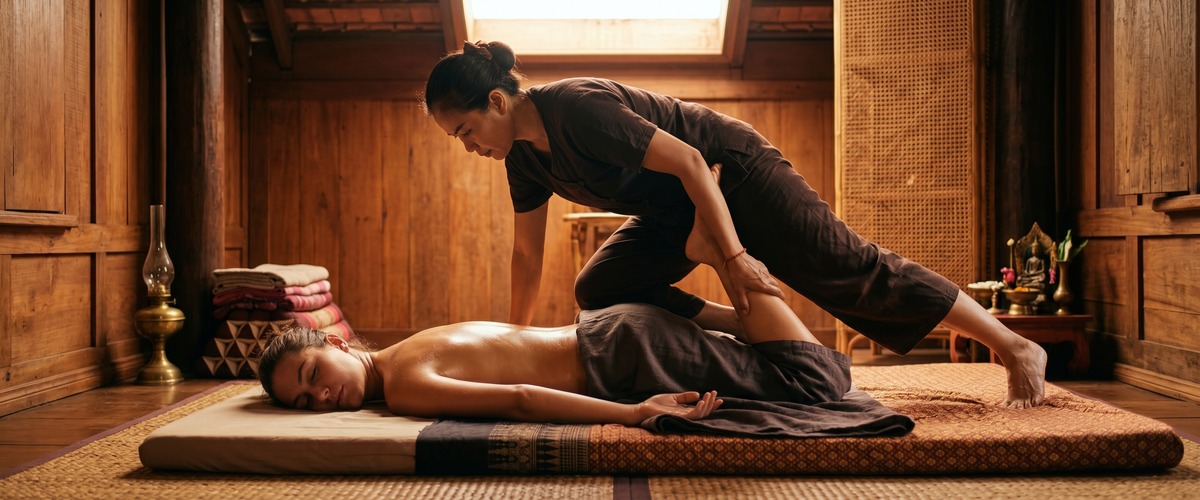
- Traditional Thai massage is done fully clothed on a floor mat, using acupressure, compression, and assisted stretching. Being clothed removes a common source of self-consciousness, which helps if undressing for a treatment is part of what makes you tense.
- Thai oil massage adds warm oil and a gentler, flowing rhythm. The warmth gives the nervous system an early calming cue, so it tends to suit people whose anxiety runs as a low background hum rather than acute tightness — a related effect to the one covered in why heat changes everything in hot stone massage.
The overview of the different types of Thai massage lays the options out side by side. Most Glasgow listings file everything under “relaxation massage,” so the practical step is to say, when you book, that you want the session geared toward easing stress — pace and pressure can then be set to suit.
Getting the Most From a Session
A few simple things help the nervous system reach the parasympathetic state sooner, so more of the session goes to the actual work:
- Arrive with a margin. A few quiet minutes before you start beats arriving straight off a rushed commute. The M8 at rush hour does not leave most people in a restful state.
- Eat something light beforehand. Going in hungry keeps the body on edge.
- Say what you need. Tell the practitioner if you are anxious, where you hold tension, and how firm you like the pressure. You do not have to manage how you appear — being able to speak up is part of why the work lands.
- Treat regularity as the point. A single session can ease tension and calm you for a day or two, but for long-running stress the bigger shift comes from a run of sessions, after which a monthly visit usually holds it.
For stress that travels alongside an active lifestyle or training load, the active lifestyle guide to injury prevention and recovery through massage covers how regular bodywork keeps the system from staying on alert between efforts.
None of this replaces support for your mental health; it sits alongside it. When the body is less braced, the mind often has more room to follow. When you are ready, you can book a session.