Thai Oil Massage vs Traditional Thai Massage: Why Sequence Matters
Thai Oil Massage vs Traditional Thai Massage in Glasgow
The real difference between Thai oil massage and traditional Thai massage is not the oil. It is the order the technique arrives in. Traditional Thai massage front-loads acupressure and assisted stretching to release tight tissue first, while Thai oil massage folds those same stretching sequences into long, oil-lubricated strokes borrowed from Swedish massage, building toward relaxation rather than opening with it.
Most guides stop at “one uses oil, one doesn’t” and leave you guessing which to book. That’s not much use if you’re deciding between Thai massage in Glasgow for a stiff shoulder versus a draining week. Once you know which comes first, the stretch or the stroke, picking the right session gets a lot easier.
Glasgow Thai Massage is a traditional Thai massage studio in Glasgow city centre, on West Nile Street, and both treatments draw on the same Wat Pho techniques Maliwan trained in, just delivered in a different sequence. You can book a session online to try either approach.
Traditional Thai massage builds from acupressure and assisted stretching
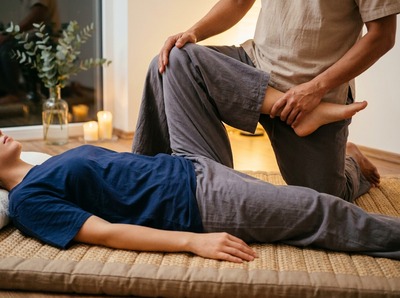
Traditional Thai massage, sometimes called Nuad Thai, is done fully clothed on a floor mat. The therapist uses thumbs, palms, elbows and knees to press firmly along the sen lines. Those are the body’s energy pathways in Thai massage theory.
Then comes assisted stretching, where the therapist guides your limbs through yoga-like ranges of motion that improve flexibility and range. Combining pressure and movement in one treatment is what sets Thai massage apart from styles that rely on hands-on strokes alone.
In Thai massage, the stretch work comes early, while the tissue is still cold. That is why the treatment has a reputation for feeling like a workout as much as a treatment.
Maliwan has watched what that stretch-first order can do. She recalls a client whose shoulders were so tight she couldn’t turn her head more than a few degrees, after years of tension building without her noticing.
After the first session, she could move her neck freely again, and she cried a little because she’d forgotten what that felt like. The order also shapes what you should expect afterward.
Real change often unfolds over the next 24 to 48 hours as your body integrates the stretch work, so don’t judge the session only by how you feel walking out the door. For stubborn tension, weekly or fortnightly sessions work best, and once things improve, monthly is often enough to keep them stable.
The research points the same way on the muscle side. A randomised controlled trial of 22 patients with chronic low back pain found that four weeks of traditional Thai massage plus stretching improved pain, flexibility and disability scores more than self-care advice alone. If you want deep release in one tight area, the traditional Thai massage treatment leads with exactly that.
Thai oil massage extends the stretch into a longer treatment sequence
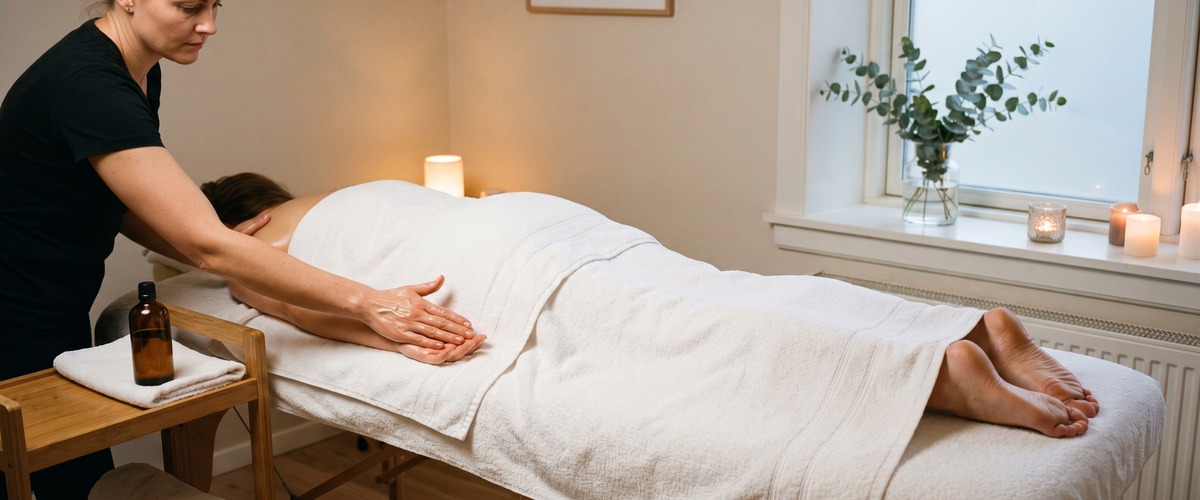
Thai oil massage keeps the acupressure and stretching of traditional Thai massage. It simply slides warm, therapeutic oils under the strokes. The therapist can then move smoothly along the sen lines instead of pressing static points.
Most comparison guides skip the practical questions people actually ask: what happens minute by minute, what you take off, which oil goes on and how long the whole thing runs. You undress to your underwear and stay draped throughout, with only the area being worked on uncovered. Your therapist will talk you through which oil suits your skin before starting, and an unscented or hypoallergenic blend is there if you ask.
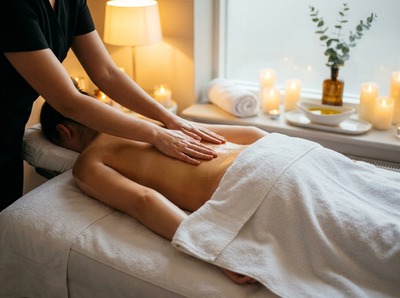
Because the oil lets the hands glide rather than grip, the stretch sequences arrive earlier and more gently. The session then closes with long, flowing strokes that carry more of a Swedish massage rhythm.
That closing phase is where the order matters most. The muscle work happens first. Then the nervous system gets its own dedicated run of calming, oil-lubricated strokes on top.
Glasgow Thai Massage’s reviewers describe exactly that combination. One client wrote, “I had pain of my back ,shoulders and neck too much then I choose deep tissue massages for 1hour”, and booked a deep tissue Thai oil massage to deal with it.
Another said, “She knew exactly where to apply pressure and how to release tension without ever causing discomfort.” Both put the muscle relief first and the comfort alongside it. That is the order this treatment is built around.
Why the order changes what you feel afterward
Stretch-first versus oil-last is not just a technique choice. It changes what you leave with.
Stretch-first work, the traditional Thai massage approach, tends to leave clients loose and energised. The deepest tissue work happens while circulation and attention are still building.
Oil-last work stretches out the calming phase instead. Researchers in Thailand have looked at this calming effect directly, including a randomised controlled trial published in the Journal of Bodywork and Movement Therapies that compared traditional Thai massage with simply resting under stressful conditions.
Participants who received traditional Thai massage reported feeling less stressed than those who rested. Add oil-lubricated closing strokes on top of that same technique, as Thai oil massage does, and the calming phase runs longer rather than just being present.
We see a simple sign of this in the room. Jariya notices that clients who arrive stressed often hold their breath without realising it. Somewhere around the halfway point, their breathing settles back to normal.
When she mentions it, most are surprised by how much tension they were carrying in their breath alone. In our experience, the longer that settled stretch at the end of a session lasts, the longer the calm tends to follow you out the door.
Listen to how clients describe the problem and the choice gets simpler. People arrive naming a body part, their back, shoulders, neck or hip, and describe good sessions in terms of results: “Could not believe the improvement after one massage.” Others simply want “a proper massage to relax you”. Language about a specific pocket of tension points to the stretch-first order, and language about wanting to switch off points to the oil-last one.
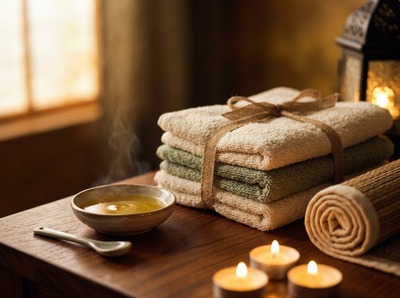
One mix-up is worth naming. Plenty of people look for a routine Swedish massage when the flowing, oil-based strokes they want sit closer to Thai oil massage’s closing sequence. Glasgow Thai Massage doesn’t run a separate Swedish session, so the Thai Relaxing Oil Massage is the closest match.
If in doubt, ask which sequence a treatment opens with. That is the quickest way to tell the two apart.
Choosing between Thai oil massage and traditional Thai massage in Glasgow city centre
The common advice is to book oil massage if you want gentle and traditional Thai massage if you want firm. That misses the point. Pressure can be adjusted in either treatment.
The order can’t. Maliwan has a client who expected traditional Thai massage to be far too intense, and it is now the one hour a month he actually switches off from his phone.
Match the order to your goal rather than the label. Carrying a specific pocket of tension in your back, shoulders or hip from manual work, a long commute or a weekend of golf? Choose the stretch-first structure of traditional Thai massage and ask for deep pressure.
If your priority is relaxation, or an hour where your body properly switches off, pick the oil-last structure of Thai oil massage. It spends more of the session on the calming end of that sequence.
Picture two people finishing work on St Vincent Street on the same Thursday. One has a right shoulder locked from a week hunched over a laptop. The other has slept badly for a fortnight and can’t stop checking emails.
They could book the same 60 minutes at Glasgow Thai Massage and still need opposite sequences: stretch-first for the shoulder, oil-last for the sleep.
Either way, book your appointment online and tell the therapist which outcome you are chasing, and how firm or light you want the pressure. It shapes how they order the session, not just which techniques they use.
Whether you work near Buchanan Street or commute in from further out, a 60-minute session of either treatment fits a lunch break or an after-work visit to the studio in Victoria Chambers, 142 West Nile Street, Glasgow G1 2RQ. Reviewers value a session tailored to what they walked in with, and one summed it up simply: “The massage was done to the pressure requested.” See our full treatment menu to compare lighter and deeper pressure options for both styles, or call 0737 932 2305 before you book.
Found this useful? Add blog.glasgowthaimassage.co.uk as a preferred source on Google so our latest guides show up first for you in Search and AI Overviews.