Traditional Chinese Medicine – Mystery Or Magic?
Acupuncture and Traditional Chinese Medicine (TCM) come up often when people start exploring Thai massage in Glasgow — and for good reason. Both traditions describe the body as a network of energy channels, and both work to keep energy moving freely along those channels. They are not the same practice, but they grew from overlapping ideas about how the body holds tension and how it heals. This piece sets out what TCM and acupuncture actually involve, what the evidence does and doesn’t support, and how Thai massage — built on its own map of energy lines — connects to that older system.
What Traditional Chinese Medicine is
TCM is a system of diagnosis and treatment developed in China over roughly two thousand years. Its foundational text, the Huangdi Neijing (the Yellow Emperor’s Inner Classic), is generally dated to the Han dynasty, around the 2nd century BCE, and still underpins how practitioners think today.
At its centre is the idea of Qi (pronounced “chee”) — a vital energy that flows through the body along channels called meridians. Health, in this model, depends on Qi flowing freely and on the balance of two opposing qualities, Yin and Yang. When that balance is disrupted by stress, injury, poor diet or illness, Qi is said to stagnate, and symptoms follow. TCM is not a single technique but a toolkit: acupuncture, herbal medicine, dietary therapy, and movement practices such as Tai Chi and Qigong all work toward the same goal of restoring balance.
It’s worth being clear-eyed here. Qi and meridians are traditional concepts, not structures that show up on a scan. That doesn’t make the practices worthless — but it does mean the framework and the clinical evidence are two separate conversations.
What acupuncture actually involves
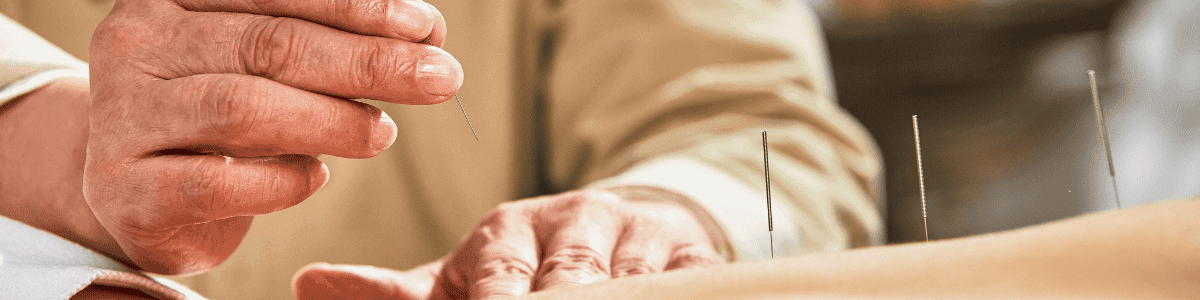
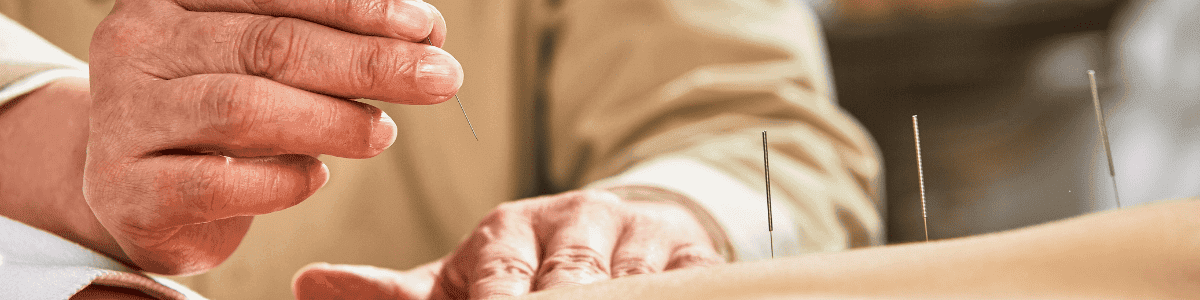
Acupuncture is the best-known part of TCM. A practitioner inserts very fine, sterile, single-use needles into specific points on the body — acupoints — that traditionally sit along the meridians. The needles are far thinner than those used for injections, and most people feel little more than a dull ache or tingling at each point.
In practice, acupuncture is most often sought for:
- Pain — particularly chronic lower-back pain, neck pain, tension-type headaches, and migraine
- Stress and low mood — to support relaxation and a sense of calm
- Sleep — where tension and a racing mind get in the way
- General wellbeing — as part of a wider routine rather than a single fix
A measured note on evidence: research on acupuncture is genuinely mixed. Some of the better-quality trials and guideline reviews — including, at points, NICE guidance in the UK for chronic primary pain and for migraine prevention — have found it can be a reasonable option for certain conditions. Other studies show benefits that are small, or hard to separate from placebo. The honest summary is that acupuncture may help some people with some conditions, especially pain, but it is not a guaranteed treatment and it should never replace medical advice for anything serious.
Herbal medicine and the wider toolkit
Alongside needles, TCM practitioners often prescribe herbal formulas tailored to the individual — combinations of plant roots, leaves, seeds and minerals chosen to address the pattern of imbalance, rather than a single symptom. Dietary advice and movement practices round out the approach. A reasonable word of caution: herbal preparations are not automatically safe simply because they are natural — they can interact with prescription medication, so anyone taking medicines should speak to a qualified practitioner and their GP first.
Where Thai massage shares the roots
This is where Thai massage enters the picture. It is not part of TCM, and it did not come from China — but it rests on a strikingly similar idea. Thai tradition describes a network of energy lines called Sen lines, of which ten (the Sib Sen) are central to bodywork. A practitioner works along these lines using rhythmic compression, palming, thumb pressure and assisted stretching to free up areas that feel blocked or tight.
The parallel with acupuncture’s meridians is clear: both systems map the body as channels of energy and aim to keep that energy moving. The difference is the method. Acupuncture uses needles at fixed points; Thai massage uses acupressure and movement along whole lines. You can read more about that lineage in our overview of the ancient healing secrets of Thai massage, and about how the various forms differ in our guide to the types of Thai massage.
At Glasgow Thai Massage, our practitioner Maliwan trained at the Wat Pho temple massage school in Bangkok — one of the most respected sources of traditional Thai massage — and has more than twenty years of experience. That grounding in the classical Sen-line approach is the same energy-line thinking that runs through TCM, applied through hands rather than needles.
What to expect from a session
A traditional Thai massage is given on a floor mat, with you in loose, comfortable clothing — no oils, and you stay fully dressed. The work is firm and rhythmic, combining sustained pressure along the Sen lines with gentle assisted stretches that open the hips, shoulders and back. Many people leave feeling looser and noticeably calmer. As with acupuncture, the gentlest honest claim is the right one: it is traditionally used to ease tension and support relaxation, and it works well alongside conventional care rather than instead of it. If you have an injury, are pregnant, or have a medical condition, mention it beforehand so the session can be adapted. There’s more on the experience itself in our piece on the unique healing secrets of Thai massage.
The takeaway
Acupuncture, herbal medicine and Thai massage come from different cultures, but they share a common instinct: that the body holds tension along channels, and that working with those channels can help it settle. The evidence is strongest and clearest for the simplest claims — relaxation, easing of muscular tension, support for chronic pain — and it’s right to stay measured about anything beyond that.
If you’re curious to feel the Sen-line approach for yourself, you can book a session with us in Glasgow.